What a Green Bay Snowstorm Forecast Actually Says About Probability
A different kind of math tutoring in Green Bay: what that “40% chance of snow” on a local forecast actually means, and the probability math behind it.
A different kind of math tutoring in Green Bay: what that “40% chance of snow” on a local forecast actually means, and the probability math behind it.
Introduction
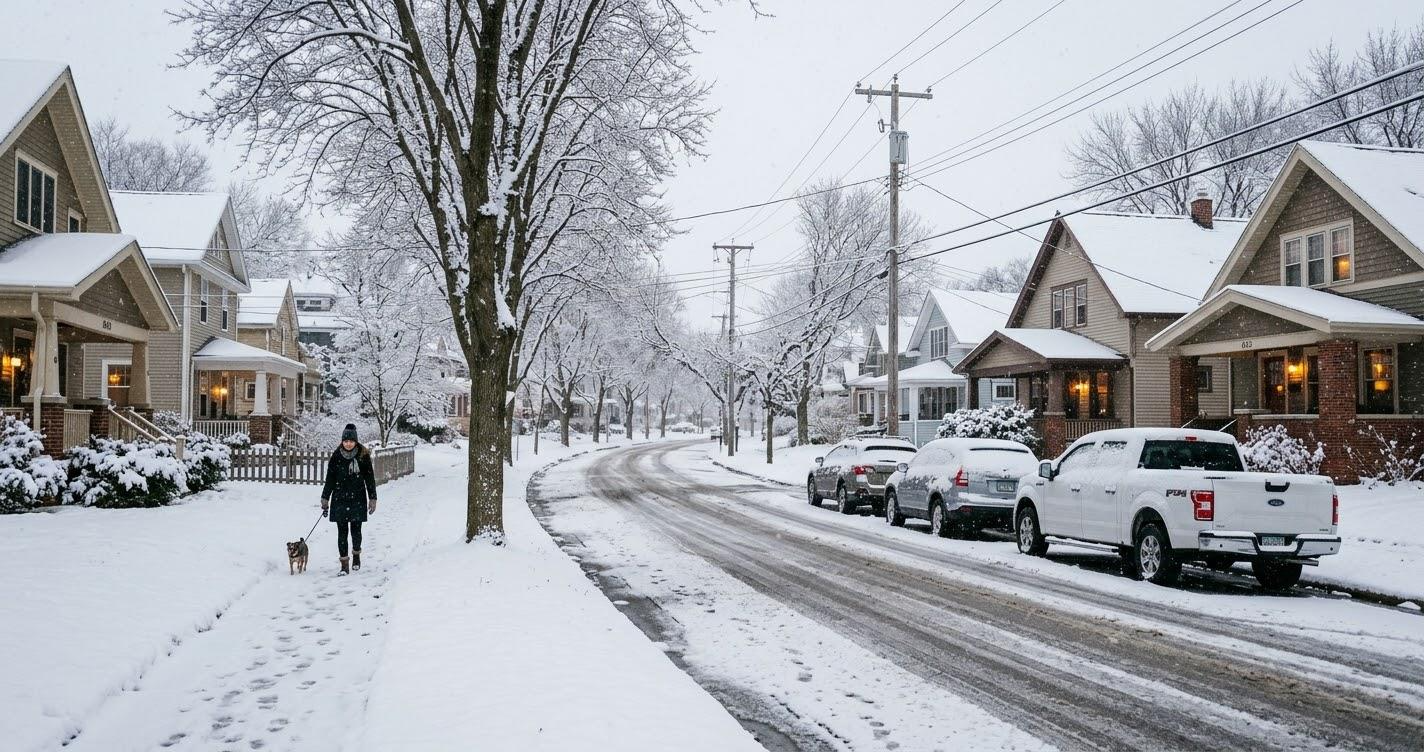
Every Wisconsin winter comes with the same ritual: checking the forecast, seeing “40% chance of snow,” and still not really knowing what that means. Turns out, it's a genuinely good math tutoring in Green Bay example hiding in plain sight.
That “40% Chance of Snow” Isn't What Most People Think
Meteorologists calculate that percentage using a simple formula: confidence multiplied by area.

The National Weather Service’s formula is Probability = Confidence × Area. So a 40% chance of snow could mean forecasters are 100% confident that 40% of the area will see snow, or only 40% confident that the entire area will see it. Same percentage, two very different stories.
It also doesn’t mean “it will snow for 40% of the day,” which is probably the single most common misunderstanding about weather percentages. It’s about the chance that any given spot in the forecast area sees measurable snow at all, not how long or how heavy it will be.
Rounding adds one more wrinkle: most forecasts round to the nearest 10%, and by convention, that number is never rounded to exactly 50%, specifically so it never reads as a coin flip the forecaster is refusing to commit to.
Why Two Different Forecasts Can Both Say “40%”
Multiplying two percentages together can land on the exact same number through completely different combinations.
100% confidence times 40% coverage equals 40%. So does 80% confidence times 50% coverage. The headline number is identical, but what’s actually happening behind it is not, which is exactly why two meteorologists can disagree yet still post the same percentage.
This is also why a snow day call can feel like a coin flip even with a confident-sounding forecast. A high percentage tied to a small coverage area might mean your exact neighborhood misses out entirely, while a lower percentage spread across the whole region might actually hit harder than expected.
The Everyday Math Behind the Forecast
This is probability in everyday life at its most practical: multiplying two percentages together to get a single combined likelihood is the same skill used in plenty of other real situations; odds of two events both happening, combined probabilities in a game, compound chances in general.
Next time a Green Bay snow day is on the line, there’s an actual equation behind that percentage, not just a guess. It’s a small, satisfying reminder of how much high school math help this is, and it’s exactly the kind of connection we build into regular sessions.
Summing-Up
That weather-app percentage is really confidence multiplied by coverage, two numbers combined into one, and untangling exactly that kind of layered probability is a regular part of math tutoring in Green Bay.